
A machinery removal project is a coordinated sequence, not a single lift. Depending on the machine and site conditions, the work may involve dismantling, rigging, lifting, crating, storage, and specialized transport. If responsibilities and handoffs aren’t clear, equipment can be exposed to damage, site hazards can be missed, and operations can face avoidable disruption.
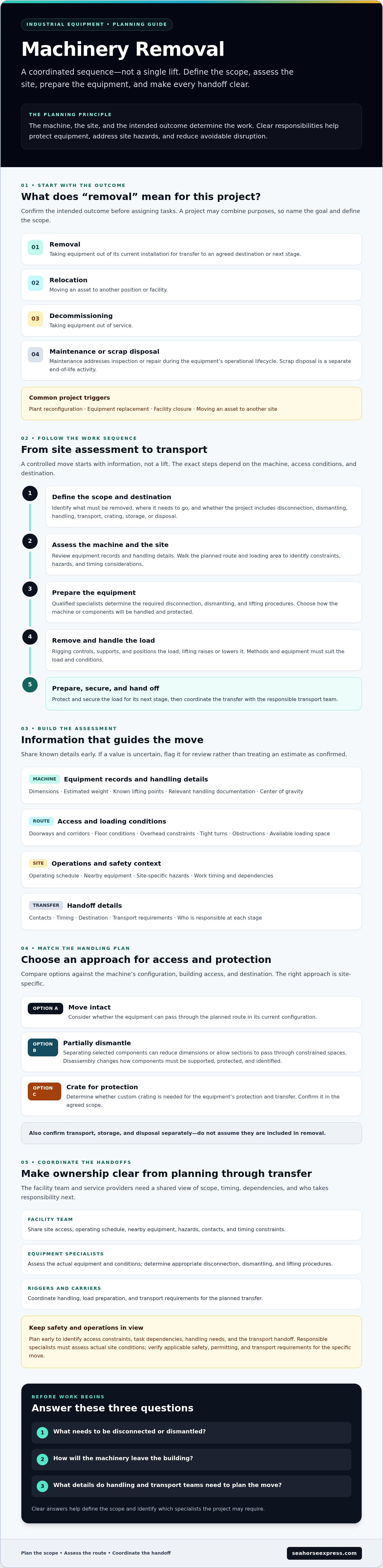
Before work begins, get clear answers to three practical questions: What needs to be disconnected or dismantled? How will the machinery leave the building? What details do the handling and transport teams need to plan the move? The answers help define the scope and identify the specialists the project may require.
This guide explains the main stages of machinery removal and how to prepare equipment, site access, and transport information. You’ll learn what to coordinate with your internal team and service providers, when rigging, custom crating, storage, or over-dimensional transportation may be needed, and how to keep safety and operational impacts in view from planning through handoff.
Key Takeaways
- Define whether the project involves removal, relocation, decommissioning, or disposal before assigning work.
- Use equipment dimensions, weight, center of gravity, and site access details to guide handling and transport planning.
- Compare intact, partially dismantled, and crated options based on access constraints and equipment protection needs.
- Prepare machine records, site access information, contacts, timing, and destination details before work begins.
- For machinery removal, clarify responsibilities and handoffs among facility teams, equipment specialists, riggers, and carriers.
What Does Machinery Removal Involve, and When Is It More Than Moving Equipment?
A machine can’t always be moved as it stands. Machinery removal is a planned scope of work to prepare equipment, handle it, and transfer it from its current position to an agreed destination or next stage. Depending on the machine and facility, the scope may include disconnection by qualified personnel, dismantling, rigging, lifting, load preparation, and transport coordination. Machinery removal is the coordinated preparation and handling of industrial equipment for transfer, with specific tasks defined by the machine, site, and intended outcome.
Removal isn’t automatically the same as relocation. Relocation means moving an asset to another position or facility, while removal describes taking it out of its current installation. Decommissioning focuses on taking equipment out of service. Routine maintenance addresses inspection or repair while equipment remains in its operational lifecycle, and scrap disposal is a separate end-of-life activity. A project may combine more than one purpose, so confirm the intended outcome before setting the scope.
Which tasks can a machinery removal project include?
Dismantling separates a machine or selected components so they can pass through access points or be handled and transported in sections. Rigging uses appropriate equipment and methods to control, support, and position a load. Rigging for material handling provides background on the tools and processes involved. Lifting raises or lowers the equipment, while load preparation protects and secures it for the next stage.
The right combination depends on the machine’s configuration, building access, and destination. Confirm transport, custom crating, storage, and disposal separately in the agreed scope rather than assuming they are included in removal.
When should a business plan a machinery removal project?
Common triggers include plant reconfiguration, equipment replacement, facility closure, and moving an asset to another site. Start planning before disconnection. Early coordination gives the facility team and specialists time to identify access constraints, dependencies between tasks, handling needs, and the handoff to transport. For example, removing a production machine may need to align with the planned installation of replacement equipment.
General planning can establish objectives, contacts, timing, and likely work stages. It can’t replace site-specific engineering or safety decisions. Responsible specialists must assess the actual equipment and conditions, and the project team should verify applicable safety, permitting, and transport requirements for the specific move.
How Machinery Removal Moves from Site Assessment to Transport
A controlled move starts with information, not a lift. First, define what must be removed and where it needs to go. Then assess the machine and site, prepare the equipment, carry out the planned removal, secure the load, and coordinate its transfer. This sequence is a useful framework, but the specific steps depend on the equipment, access conditions, and destination.
What information should the initial site assessment capture?
Gather available equipment records, dimensions, estimated weight, known lifting points, and relevant handling documentation. If a value is uncertain, flag it for review instead of treating an estimate as confirmed. These details help project personnel evaluate how the machine can be handled and whether it can pass through doorways, corridors, or other restricted areas.
Walk the planned route and loading area. Note floor conditions, overhead constraints, tight turns, obstructions, and available loading space. Record the operating schedule, nearby equipment, and site-specific hazards so the team can review access and timing alongside the handling plan. The machine’s center of gravity also affects lifting and movement decisions. Qualified project personnel must determine how it should be assessed.
How do dismantling and rigging prepare machinery for removal?
After reviewing the scope and site conditions, qualified specialists determine the necessary disconnection, dismantling, and lifting procedures. Disassembly may reduce a machine’s dimensions or separate components so they can move through constrained spaces. It also changes how the equipment must be supported, protected, and identified for transfer.
Rigging is the planned handling and movement of heavy equipment using methods and equipment suited to the load and conditions. The Specialized Carriers & Rigging Association (SC&RA) provides information about the rigging and specialized-carrier sector. Qualified personnel familiar with the machine and site must select rigging equipment and lift procedures. They should also determine how the equipment will be secured for transport.
Before work begins, align the handoffs: who prepares the machine, who manages its movement out of the facility, who protects and secures it, and who coordinates the transfer. This helps identify gaps before equipment is disconnected. If the project may combine dismantling and rigging with heavy hauling or over-dimensional transportation, review Seahorse Express machinery dismantling and rigging services as one possible part of the move.
What Makes Machinery Removal Complex: Access, Risk, and Transport Fit
A machine that clears a doorway isn’t automatically ready for transport. The doorway is only one part of the route. Turns, floor conditions, overhead clearances, loading access, and the transport plan also affect how equipment can be handled. Machinery removal planning must account for the machine’s condition and configuration as well as the path from its current position to the vehicle.
Handling choices also depend on whether equipment moves intact, in sections, or in a crate. Each option changes the access needed, the points that require protection, and the information a carrier needs to plan the load. Review the machine’s records and condition before work begins, including fragile components and exposed moving parts. The OSHA General Requirements for All Machines is a reference for machine-guarding requirements. Site teams should have qualified personnel assess hazards relevant to the work.
How do site access and equipment condition change the removal plan?
Open access to a loading area may allow a more direct handling sequence. Restricted doors, low clearances, or confined work areas may require a different route or consideration of partial dismantling. Equipment condition matters too. Raise delicate parts, uncertain lifting points, or incomplete documentation with the responsible specialists before making handling decisions.
| Configuration | Access and handling considerations | Protection and transport planning |
|---|---|---|
| Intact equipment | Confirm the full route and clearances, then assess how the complete machine can be handled. | Review condition, load dimensions, weight, and securement needs. |
| Partially dismantled | Plan movement for the main unit and separated parts, including the space needed to work. | Identify and protect components, and coordinate how each piece will be transported. |
| Crated components | Check that crate dimensions suit the route and loading access. | Confirm what needs protection and how the packaged items fit the planned transport. |
When might crating, storage, or specialized hauling be needed?
Custom crating may be appropriate when components need added protection during handling and transport. Temporary storage or staging can help when removal and onward transfer don’t happen at the same time. Confirm the location, duration, and handling responsibilities in the project scope.
Heavy or oversized machinery may require heavy hauling or over-dimensional transportation. The transport plan depends on the actual load, dimensions, route, and destination. Verify requirements for the specific move rather than assuming one plan fits every load.
How to Prepare a Facility for Safe, Coordinated Machinery Removal
A prepared facility gives each project participant the information needed to plan their part of the move. Before scheduling work, gather equipment records, confirm who can answer site questions, and agree on how removal activity will fit around facility operations. Clear responsibilities help prevent gaps between equipment preparation, handling, and transport.
What should the facility team prepare before removal day?
Build a shared project file with available specifications, drawings, operating information, and manufacturer or site handling instructions. Flag missing or uncertain details for review by the responsible equipment specialist. Confirm the destination and who will receive the equipment, particularly if the move includes staging or storage.
- Equipment information: Share records, known condition issues, and available handling guidance.
- People and communication: Name the facility contact, equipment specialist, contractor, and carrier contacts. Agree on how schedule changes and site issues will be communicated.
- Access and timing: Confirm entry arrangements, the route to the loading area, loading access, operating constraints, and facility activities that could affect the sequence.
- Shutdown coordination: Arrange disconnection and shutdown through appropriately qualified personnel, following the facility’s established procedures.
The facility team should provide accurate site information, coordinate internal operations, and identify who has authority to make site decisions. Contractors and equipment specialists should confirm their assigned preparation and handling tasks. The carrier needs load and destination details to plan transport. Put responsibilities and handoffs in writing, especially where one team must finish its work before another can begin.
Which safety and compliance details need project-specific review?
Ask qualified site personnel to assess hazards and determine the work plan for the actual equipment and conditions. The facility’s communication plan should identify restricted work areas, relevant site contacts, and how changes or unexpected conditions will be escalated. A general checklist is not a substitute for a site-specific assessment or technical direction.
Before work begins, have the responsible parties verify applicable OSHA requirements and other relevant standards for the planned activities. Transport requirements also depend on the actual load and route. Permits, escorts, or route reviews may be necessary in some cases, but confirm them against project details rather than assuming they apply. Record who is responsible for checking and arranging each applicable requirement.
Once the facility has assembled records, clarified contacts, and identified operational constraints, discuss how removal preparation will connect with hauling or other transport needs. Seahorse Express industrial machinery move capabilities include relevant dismantling and rigging, heavy hauling, and over-dimensional transportation services.
How to Coordinate Machinery Removal with a Transport Partner
A transport partner needs a clear scope before the move is scheduled. Agree on where the provider’s work begins and ends, who controls each handoff, and what must be confirmed before the next stage proceeds. This is especially important when dismantling, rigging, load protection, hauling, staging, and delivery involve different teams.
What should businesses confirm with a machinery removal provider?
Share the equipment information, origin and destination requirements, site access details, and timing constraints gathered during planning. Then ask direct questions about responsibilities and dependencies:
- Which stages are included, and which remain the facility’s responsibility?
- Who coordinates the handoff from dismantling and rigging to load protection and hauling?
- What needs to be ready before the carrier arrives, and what could affect the agreed sequence?
- Which equipment details, site records, and transport documents are required?
- How will the teams communicate changes in scope, site conditions, or transport requirements?
Ask the provider to identify assumptions that still need verification. Confirm service availability, equipment requirements, and project-specific arrangements before contracting. A general service description doesn’t establish what a particular move requires. Document the agreed scope and identify who must approve changes, so an access constraint or updated load detail doesn’t leave a gap in responsibility.
How can removal connect with hauling, crating, and storage?
When a project calls for both preparation and transport coordination, aligning those stages can make handoffs clearer. Seahorse Express provides machinery dismantling and rigging alongside heavy hauling and over-dimensional transportation. Custom crating may suit components needing added protection, while warehousing and storage can support a planned gap between removal and onward movement. Confirm whether each service fits the cargo and is included in the agreed scope.
For moves involving a port, port drayage may be part of the transport plan. Import and export logistics may also apply when equipment moves across international borders. These needs depend on the shipment and route, so confirm the required services, responsibilities, and documentation with the relevant project partners.
Before finalizing a plan, bring the facility contact, equipment specialists, and transport partner together to review the sequence and unresolved details. Review Seahorse Express industrial logistics services to see which capabilities may fit the project.
Plan the Move with Clear Responsibilities
A well-planned machinery removal begins with a defined scope and continues through coordinated preparation, handling, and transport. Confirming equipment details, site access, timing, and team responsibilities helps identify dependencies before work starts. The right approach may involve moving equipment intact, dismantling it into sections, or arranging protection and staging for the next phase.
Seahorse Express offers machinery dismantling and rigging, along with nationwide heavy hauling and over-dimensional transportation. Custom crating, warehousing, and storage may also support a move when the equipment and schedule call for them. Confirm the services, responsibilities, and project requirements that fit your specific move before contracting.
With a clear plan and aligned handoffs, your team can approach the next steps with greater confidence. Discuss your machinery removal and transport requirements with Seahorse Express to review the logistics capabilities that may fit your project.
Frequently Asked Questions
What does machinery removal include?
Machinery removal may include site assessment, equipment preparation, dismantling, rigging, lifting, and loading. The scope depends on the machine, facility conditions, and intended destination. A project may also include crating, storage, or specialized transport, but don’t assume these tasks are included. Before work begins, confirm the endpoint, who handles disconnection and site controls, and which provider is responsible for each stage, including final placement if it’s part of the project.
How is machinery removal different from machinery relocation?
Removal means taking equipment out of its current position or facility; relocation means moving it to another location. A removal scope may end when the machine is loaded or transferred to a carrier. Relocation may continue through transport, staging, and delivery, with destination coordination or installation handled under a separate scope. Define the project’s endpoint in writing so the facility team and providers understand what is included and what remains to be arranged.
Does machinery need to be dismantled before removal?
No, dismantling isn’t required for every move. Some equipment can be handled intact, while other machinery may need partial or more extensive disassembly because of access limits, dimensions, or handling requirements. Have qualified equipment and rigging professionals assess the machine and site before deciding. If components are separated, clarify how they’ll be identified, documented, protected, and matched to the equipment at the destination.
How do you prepare a facility for machinery removal?
Start by gathering equipment records, dimensions, estimated weight, condition information, and available handling instructions. Identify the access route, loading area, facility contacts, operating constraints, and nearby equipment that may affect the work. Coordinate shutdown and disconnection through appropriately qualified personnel and follow site procedures. Before scheduling, review the project sequence with the facility team and providers, and resolve missing information that could affect access or timing.
What information should I provide to a machinery removal company?
Share the equipment type, known dimensions and weight, condition, origin and destination requirements, site access details, and timing constraints. Include drawings, operating information, and handling instructions if available, and flag details that still need confirmation. Explain whether dismantling, rigging, crating, storage, or heavy hauling may be needed. This information helps the provider clarify the proposed scope, identify dependencies, and determine what additional assessment the project requires.
Can machinery removal include transport and storage?
Yes, transport or temporary storage can be included when the project requires it and the scope is agreed in advance. Custom crating may also be relevant for equipment or components that need added protection. These services aren’t automatically part of every removal job. Confirm pickup and delivery points, storage arrangements, handling responsibilities, and protection requirements with the providers coordinating each stage.
Who is responsible for safety during machinery removal?
Safety responsibilities depend on the work scope, facility arrangements, and applicable requirements. Before work begins, the facility and contractors should clarify roles, communication, access controls, and project-specific procedures. Qualified personnel should assess site hazards and determine appropriate methods for disconnection, lifting, and handling. Verify applicable OSHA requirements and other relevant standards for the specific operation. General guidance isn’t a substitute for a qualified, site-specific review.


