
A fully covered load doesn’t automatically need an enclosed trailer. A conestoga trailer pairs a flatbed-style deck with a retractable cover, protecting freight while allowing access from the sides or above when the cover is open. That can matter when an uncovered flatbed seems too exposed, but a dry van may not suit the way your cargo needs to be loaded.
Whether this equipment can accommodate your freight depends on its dimensions, weight, loading requirements, and the specific trailer configuration. The cover alone doesn’t determine the fit. This guide explains how the rolling system works, what cargo it may suit, and how it compares with a standard flatbed, dry van, or partial truckload option.
You’ll also learn which shipment details help a freight partner assess the fit, including dimensions, weight, loading method, and protection needs. Seahorse Express coordinates domestic full truckload and partial truckload transportation and can discuss options for your shipment. Confirm the specific trailer’s availability, dimensions, weight limits, and loading features before booking.
Key Takeaways
- A conestoga trailer uses a movable cover, but its access points and specifications depend on the unit. Check the equipment details rather than assuming every configuration loads the same way.
- Compare a Conestoga with a flatbed or dry van by considering how the freight must be loaded, handled, and protected.
- Before requesting a freight recommendation, gather the shipment’s dimensions and weight, pickup and delivery access details, loading method, and cargo protection needs.
- Match equipment to the complete handling plan, including site access and cargo sensitivity, not just the load’s measurements.
- Discuss domestic full truckload or partial truckload options with a freight partner, and confirm equipment availability for the specific shipment.
What Is a Conestoga Trailer? Understand Its Design and Purpose
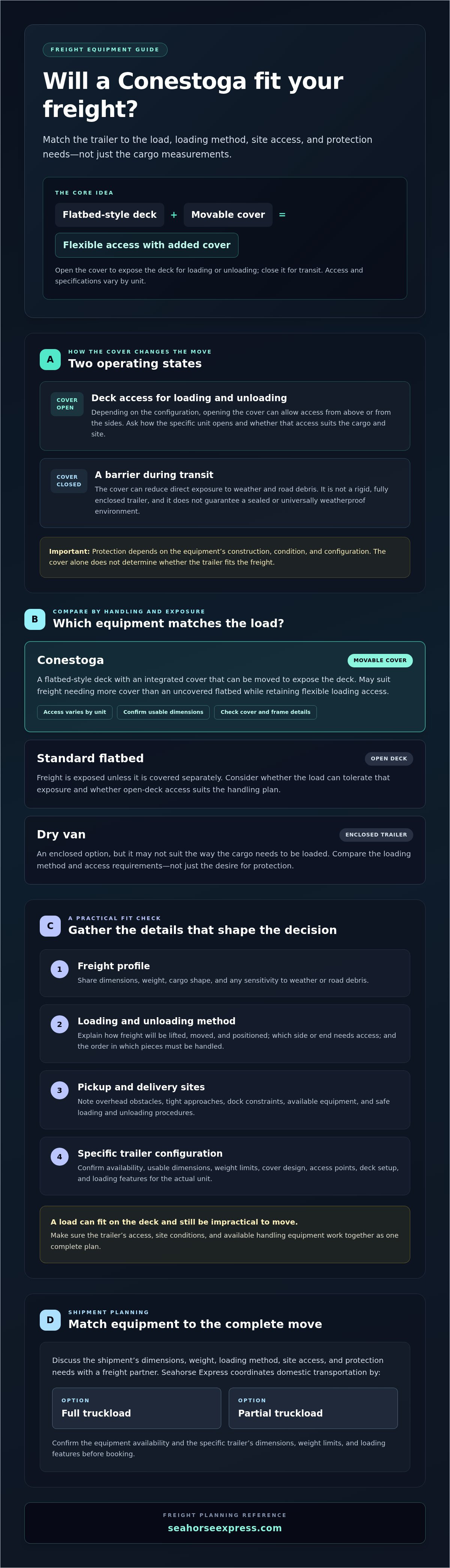
A conestoga trailer is a flatbed-style trailer fitted with a movable cover system. The cover can be moved to expose the deck for loading or unloading, then closed for transit. This arrangement may suit freight that needs more protection than an uncovered flatbed provides but still requires flexible loading access. For a general overview of its place among semi-trailers, see Conestoga trailers.
A Conestoga uses a sliding cover system over a flatbed; it isn’t a rigid, fully enclosed trailer. The cover can reduce direct exposure to weather and road debris, but it doesn’t automatically provide the same enclosed environment as a sealed van. The level of protection depends on the equipment’s construction, condition, and configuration.
Configurations vary in cover design, supporting frame, deck style, interior dimensions, and available access. Before planning a shipment, confirm the actual unit’s specifications, including usable dimensions and how cargo can be loaded and secured. Don’t assume that a trailer described as a Conestoga has a particular door, roof, or loading feature.
How the sliding tarp and frame system works
A frame supports the movable cover as it travels along the trailer. Depending on the design, the system can uncover some or all of the deck for loading, then move back into position. This can make cargo accessible from above or from the sides, but the opening and movement vary by configuration. Ask how the specific unit opens and whether that access works with your freight and the equipment available at your site.
Loading also depends on the cargo’s shape and the handling equipment at pickup and delivery. For example, freight lifted from above may require a different opening and loading plan than cargo handled from the side. Confirm the method before dispatch rather than relying on the trailer category alone.
How a Conestoga differs from a standard flatbed
A standard flatbed leaves freight exposed unless it’s covered separately. A Conestoga’s integrated movable cover can reduce direct exposure during transit while retaining a deck that can be uncovered for loading. That combination may be useful when cargo needs deck access as well as added protection.
The cover isn’t a substitute for checking the shipment’s protection requirements. Consider how the load will be accessed, how sensitive it is to weather or debris, and whether the trailer’s cover and dimensions meet its needs. These details help distinguish a Conestoga from an uncovered flatbed and an enclosed trailer, which have different access and exposure characteristics.
How Conestoga Trailers Handle Loading, Access, and Cargo Protection
Loading a conestoga trailer depends on more than cargo weight and dimensions. The cover system, deck configuration, cargo shape, and equipment available at each site all affect how freight can be placed and removed. A unit may allow side or top access when opened, while rear access depends on its setup. Inbound Logistics describes the combination of cargo protection and loading flexibility in its overview of Conestoga freight trailers, but shippers still need to verify how a particular unit handles their load.
What loading access should shippers confirm?
Start with the handling method. Does the freight need crane access from above, forklift access from the side, or a particular approach to the trailer’s rear? Ask whether the cover opens far enough for the planned loading sequence and whether the deck and access points suit the cargo’s shape. Then check site clearance, overhead restrictions, dock arrangements, and safe loading and unloading procedures. The trailer must fit both the freight and the sites.
Share these details with the carrier before dispatch:
- How the cargo will be lifted, moved, and positioned.
- Which side or end needs to remain accessible.
- Any overhead obstacles, tight approaches, or dock constraints.
- The order in which pieces must be loaded and unloaded.
Confirm that the actual trailer can support this sequence. Cargo may fit on the deck but still be impractical to move if the required access or site equipment isn’t available.
What cargo protection does the cover provide?
The movable cover acts as a barrier that can reduce direct exposure to weather and road debris during transit. It doesn’t establish a universal weatherproof guarantee or replace packaging suited to the cargo. Protection depends on the cover’s condition and fit, as well as the freight’s sensitivity to moisture, dust, or handling. Cargo may also be exposed while the cover is open during loading or unloading.
Describe the cargo’s protection needs before the shipment moves. Equipment with exposed components, for example, may need additional preparation even under a cover, while packaged freight may have different requirements. Ask what protection the specific configuration provides and whether the handling plan addresses exposure at both ends. Shippers should confirm loading access and cargo protection against the actual trailer configuration.
For domestic freight planning, discuss your shipment requirements with a freight partner and confirm equipment availability for the load.
Conestoga vs. Flatbed vs. Dry Van: Which Trailer Fits the Load?
Trailer selection depends on how freight needs to be loaded, what protection it requires, and whether the equipment can accommodate its dimensions and weight. A conestoga trailer combines an open-deck loading approach with a movable cover, but that cover doesn’t make it identical to a dry van. For a brief description of the Conestoga design, see Conestoga (truck).
| Trailer type | Access and cover | Loading considerations | May suit cargo that... |
|---|---|---|---|
| Conestoga | Open-deck style with a movable cover; access varies by configuration. | Needs the cover opened and may require specific side, top, or rear access. | Needs flatbed-style handling with a cover, subject to the unit’s dimensions and capabilities. |
| Flatbed | Open deck without an integrated cover. | Can suit loading from above or the sides, depending on site equipment and load. | Needs open-deck access or a loading setup that better matches an uncovered trailer. |
| Dry van | Enclosed body with access typically through its doors. | Requires cargo and handling equipment to work with the available interior access. | Needs an enclosed body and can be loaded within its dimensions and access limits. |
When a Conestoga may suit a shipment
Consider this option when freight needs a flatbed-style deck and a movable cover could help reduce direct exposure during transit. Assess the full picture: cargo dimensions and weight, securement requirements, sensitivity to exposure, and how the shipment will be loaded and unloaded. Cargo lifted from above, for example, may need a different opening than freight handled from the side. Confirm the specific trailer’s capabilities with the carrier before treating it as a fit.
When a flatbed or dry van may be a better fit
A flatbed may make more sense if the load needs open access or a loading arrangement that the available covered trailer can’t provide. A dry van may be preferable when an enclosed body is required, provided the cargo fits and can pass through the available access. Neither choice is automatically best; shipment requirements and equipment availability can change the recommendation.
Trailer choice is only one part of shipment planning. If you’re weighing full truckload against other shipment structures, review this full truckload freight shipping guide, then confirm the trailer configuration and availability for your specific load.
How to Check Whether Your Freight Fits a Conestoga Trailer
A sound equipment recommendation starts with a clear shipment description, not an assumption based on a trailer name. Gather the details below before requesting a quote so the carrier can check dimensions, loading access, cargo needs, and the proposed equipment configuration. Verify a conestoga trailer’s usable space and features against the actual unit.
Shipment details to collect before requesting equipment
Build a shipment profile that covers the freight and both sites. Measure the cargo, note how it is packaged, and describe the equipment and access available for loading and unloading. If the freight is machinery, identify its lifting points and any unusual center-of-gravity concerns. For industrial moves, this machinery removal planning guide can help organize move requirements.
- Record dimensions: Provide the length, width, and height of each piece, including packaging or projections that affect the space it occupies.
- Confirm total weight: Include the combined shipment weight and, if available, the weight of individual pieces.
- Describe cargo handling: Note lifting points, packaging, required equipment, and whether loading needs access from above, the side, or the rear.
- Explain site access: Report pickup and delivery constraints such as overhead clearance, approach space, dock arrangements, and restrictions on equipment movement.
- Identify sensitivities: Flag exposure concerns, delicate surfaces, special handling needs, or scheduling requirements that could affect the loading plan.
Be precise about measurements and site limitations. A load can fit within a trailer’s stated dimensions yet still be unsuitable if its shape, loading method, or movement through the facility creates a constraint.
Questions to ask the carrier before dispatch
Ask which configuration is proposed and whether its verified dimensions, weight limits, and access features match the shipment. Confirm how the cargo will be loaded and secured, and discuss handling and protection expectations. Requirements depend on the freight and equipment, so use the specific unit’s details rather than a general description.
If the shipment’s dimensions may require permits or escorts, ask whether they apply and clarify who will coordinate them. Share complete measurements and route details so the carrier can assess the requirements for that move. Confirm the final equipment plan and responsibilities before dispatch.
Have a shipment profile ready? Discuss your freight requirements with Seahorse Express. Its domestic full truckload and partial truckload services can be considered alongside the load details, with equipment availability confirmed for each shipment.
Plan Your Domestic Freight Move with the Right Equipment
The right trailer matches the shipment’s dimensions, required access, protection needs, and handling plan. A conestoga trailer may be worth considering when its configuration suits those needs, but capacity and equipment availability must be confirmed for each shipment. Don’t book based on the trailer name alone. Check the proposed unit against the cargo details and conditions at both ends of the move.
What to include in a freight inquiry
Give a freight partner enough information to assess the move and recommend an appropriate transport option. Include the origin and destination, sharing the location details needed for planning at the inquiry stage. Then provide:
- Cargo description, dimensions, and weight: Include packaging and any unusual shape or handling considerations.
- Loading and unloading details: Note available equipment, site access limits, and any required loading method.
- Protection and timing needs: Identify sensitivity to exposure or handling, along with shipment timing requirements.
- Equipment preference: State whether a specific trailer type is required or whether you’re open to an equipment recommendation.
These details help clarify whether full truckload (FTL), partial truckload (PTL), or another suitable arrangement should be considered. Seahorse Express provides domestic FTL and PTL transportation and can discuss shipment requirements without assuming a particular trailer is available.
How to compare a carrier’s proposed solution
Review the recommendation against the information you provided. Ask which equipment configuration is proposed and confirm its dimensions, capacity, and access features against the cargo and site requirements. Discuss the loading and securement plan, and clarify who is responsible for each part of shipment coordination. Resolve any unconfirmed details before booking.
Also confirm the service scope and equipment availability for the specific move. A recommendation can change if load measurements, the loading method, or site conditions differ from the initial description. Clear expectations help prevent a mismatch between the equipment selected and the work required at pickup or delivery.
For a shipment-specific discussion, discuss your freight requirements with Seahorse Express. Sharing accurate cargo and site details is a practical first step toward evaluating domestic transport options.
Move Forward with a Clear Equipment Plan
The right freight choice depends on more than whether a trailer has a cover. Match loading access, cargo dimensions and weight, protection needs, and handling requirements to the actual equipment configuration. A conestoga trailer may offer a useful balance of deck access and a movable cover, but its suitability and availability must be confirmed for each shipment.
Before arranging transport, give your freight partner accurate cargo measurements, pickup and delivery access details, loading requirements, and any sensitivity to exposure or handling. Then confirm the proposed equipment, securement plan, and service responsibilities before booking. These details help make the recommendation specific to your move rather than based on assumptions.
Seahorse Express provides nationwide commercial domestic freight transportation, including full truckload and partial truckload services. To discuss your shipment requirements and suitable transport options, contact Seahorse Express about your freight move. With clear information and a confirmed plan, you can take the next step with greater confidence.
Frequently Asked Questions
What is a Conestoga trailer?
A Conestoga trailer is generally a flatbed-style trailer fitted with a movable cover system. The cover can provide a barrier against some direct exposure during transit and can be opened for loading or unloading. Designs vary, so confirm the actual trailer’s deck, cover, dimensions, and access features with the carrier. These specifications, along with cargo weight and handling needs, determine whether a particular unit suits your shipment.
Is a Conestoga trailer fully enclosed?
No, a Conestoga isn’t automatically equivalent to a rigid-sided, fully enclosed dry van. It has a movable cover, and the level of protection depends on the specific equipment and how the freight is packaged and handled. If your cargo has particular exposure concerns, explain them before dispatch. Ask the carrier to describe the trailer’s configuration and confirm whether its protection meets your shipment’s requirements.
What can you ship on a Conestoga trailer?
A conestoga trailer may suit freight that needs flatbed-style access and a movable cover, but no cargo category guarantees a fit. Consider the load’s dimensions, weight, shape, handling method, securement needs, and sensitivity to exposure together. For example, a shipment that requires top access must match the trailer’s actual opening and the site’s loading equipment. Share complete cargo details and confirm the specific trailer’s capabilities before dispatch.
How is a Conestoga trailer different from a flatbed?
A Conestoga typically has a flatbed-style deck with a movable cover, while a standard flatbed has an open deck without an integrated cover. This affects how cargo may be accessed and its direct exposure during transit. Neither description confirms the exact loading features of a particular unit. Compare the trailer’s access, dimensions, and protection features with the cargo and site requirements before selecting equipment.
Can a Conestoga trailer be loaded from the side or overhead?
That depends on the trailer’s design and how its cover system opens. Some configurations may allow side or overhead access, but don’t assume every unit offers the same access or rear-loading features. Tell the carrier whether loading requires a forklift, crane, or access from a particular direction. Include site restrictions, such as overhead clearance, and confirm that the actual trailer supports the planned loading and unloading sequence.
How do I know if my freight fits a Conestoga trailer?
Provide the cargo’s length, width, height, and total weight, along with details about its packaging, lifting points, and handling needs. Describe access at both pickup and delivery, including available loading equipment and site restrictions. Then ask the carrier to compare those details with the actual trailer’s dimensions, weight limits, access features, and securement plan. Confirm any special exposure or handling requirements before dispatch.
Is a Conestoga trailer better than a dry van?
Neither option is better for every shipment. A Conestoga may be considered when freight needs flatbed-style access and a movable cover, while a dry van may suit cargo that requires an enclosed body. The right choice depends on dimensions, loading method, site access, protection expectations, and equipment availability. Describe your shipment needs and ask the carrier to confirm that the proposed configuration can accommodate them.


