
What happens when cargo clears the terminal but its next truck, rail move, or delivery window isn’t ready? The handoff can become a planning challenge, especially when industrial freight needs specialized handling. Port warehousing services provide a coordinated step between terminal transfer and inland transportation, rather than treating storage as an isolated stop.
It’s understandable to focus on moving cargo out of the port quickly. But when timing, staging, or equipment requirements don’t align, a clear plan for where freight goes next can help prevent unnecessary handling and delays caused by missing information. The key decision is whether the cargo should move directly onward, wait at a warehouse, or be transferred to different equipment before dispatch.
This article explains how warehousing fits into a port-to-inland cargo plan and what to assess when choosing short-term staging, storage, or transloading. For industrial shipments such as flat racks and open-top containers, plan the transfer around the cargo’s dimensions, handling needs, and next transport leg. Seahorse Express connects warehousing and storage with port drayage, transloading, and domestic transport, including flat rack and open-top container handling across every major U.S. seaport.
Key Takeaways
- Use port warehousing services as part of a planned cargo handoff, connecting terminal transfers, storage, and inland transportation.
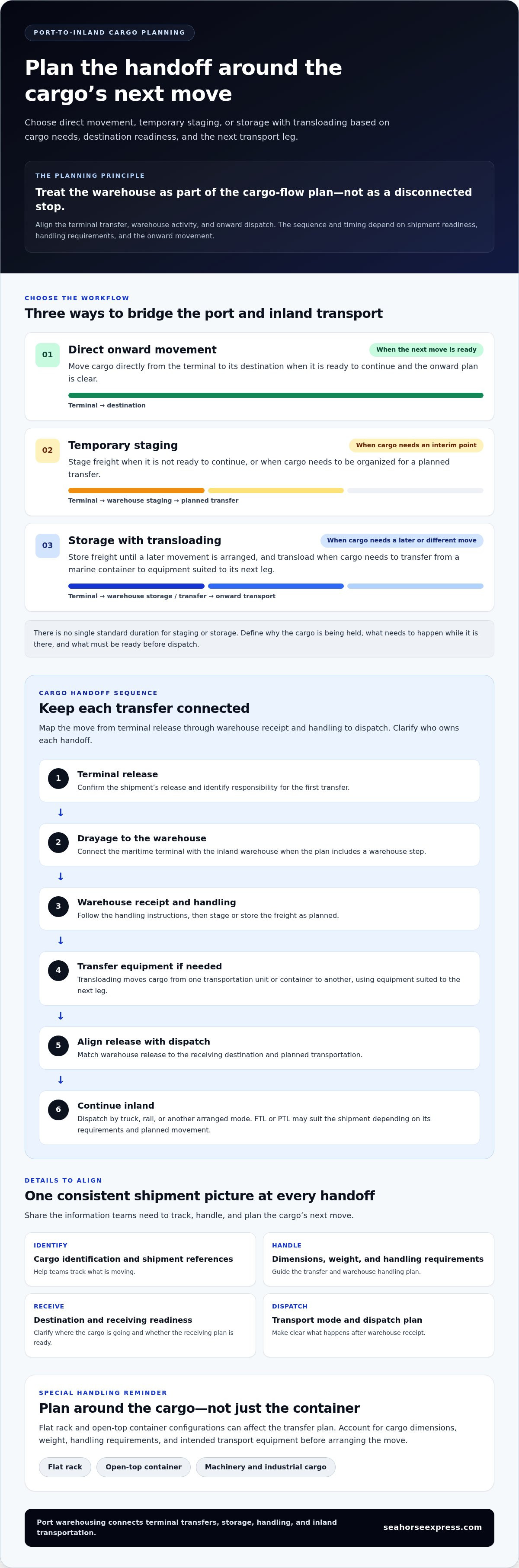
- Choose direct movement, temporary staging, or storage with transloading based on cargo needs, destination readiness, and transport mode.
- Map the sequence from terminal release through drayage, warehouse receipt, handling, and dispatch to clarify each transfer point.
- Prepare consistent shipment details, including dimensions, handling requirements, and onward transport plans, to reduce coordination gaps.
- Seahorse Express connects commercial storage with port drayage and transloading, including flat rack and open-top container handling across every major U.S. seaport.
What Port Warehousing Services Do for Commercial Cargo
Port warehousing services coordinate cargo storage and handling with its transfer from a maritime terminal to the next transportation leg. Unlike arranging a warehouse independently, port warehousing accounts for the full handoff: cargo moves from the terminal by drayage, is received and staged or stored if needed, then continues by truck, rail, or another arranged mode.
A warehouse can bridge the gap when a shipment can’t move directly from the terminal to its destination. The receiving site may not be ready, onward transport may be scheduled for later, or the cargo may need to move from a shipping container to domestic transport equipment. Plan the warehouse step around the activity before and after it, including who handles the cargo at each transfer, so storage doesn’t become a disconnected stop.
How Port Warehousing Differs from General Warehouse Storage
General warehouse storage can be planned separately from transportation. Port-linked warehousing starts with cargo arriving through a maritime terminal and accounts for the move from the terminal, the warehouse handoff, and the next dispatch. Drayage connects the port with inland destinations, while staging provides an interim point for cargo that isn’t ready to continue. For broader storage considerations, see warehouse storage planning.
The warehouse role depends on the shipment’s purpose and schedule. Temporary staging organizes cargo for a planned transfer; storage holds it until a later movement is arranged. There’s no single standard duration that defines either need. Instead, specify why the cargo is being held, what needs to happen while it is there, and what must be ready before dispatch.
Which Cargo and Container Types May Need Port Warehousing
Commercial freight and industrial cargo, including machinery, may need a warehouse between port arrival and inland movement. A shipment might need to wait for its receiving location, be organized for a later transport leg, or transfer into different equipment. The right sequence depends on the cargo and its next move.
Flat rack and open-top containers can call for coordinated handling because the cargo and container configuration affect how the transfer is planned. Before arranging the move, account for dimensions, weight, handling requirements, and intended transport equipment. Seahorse Express connects commercial warehousing and storage with port drayage and transloading, including flat rack and open-top container handling across every major U.S. seaport.
How Port Drayage, Transloading, and Warehousing Work Together
A coordinated port-to-inland move links several activities: terminal release, drayage to a warehouse, receipt and handling, staging or storage, and dispatch on the next transport leg. Treat this as a planning sequence, not a guaranteed timeline. The order and timing depend on shipment readiness, handling requirements, and the onward movement.
Each handoff needs consistent information. Cargo identification and shipment references help teams track what is moving. Dimensions and handling instructions help guide the transfer. The destination, transport mode, and dispatch plan clarify what happens after warehouse receipt. Aligning those details across the port, warehouse, and transportation stages helps prevent gaps, such as cargo arriving before the receiving plan is clear. For more on the port-to-inland connection, see this guide to professional drayage services.
A Typical Port-to-Warehouse Cargo Handoff
Start by mapping the move from terminal release to warehouse receipt. Identify who is responsible for each transfer and what shipment details must accompany the cargo. At receipt, the team can follow the handling instructions and stage or store the freight for its next move. Before dispatch, align the warehouse release with the receiving destination and planned transportation. Clear ownership at every handoff makes the sequence easier to manage without assuming that all shipments follow the same schedule.
When Transloading Supports the Next Leg
Transloading is the transfer of cargo from one transportation unit or container to another, allowing the shipment to continue on equipment suited to its next leg. It may fit when freight arrives in a marine container but will move inland in domestic transport equipment. The transfer can take place as part of a warehouse handoff, with staging or storage arranged around it.
Flat rack and open-top containers are examples where cargo configuration can affect the transfer plan. Account for dimensions, handling needs, and intended equipment rather than treating every container move alike. Once the cargo is ready for onward transport, full truckload (FTL) or partial truckload (PTL) may suit the shipment, depending on its requirements and planned movement. Port warehousing services bring these decisions into one cargo-flow plan, linking drayage, warehouse handling, transloading, and dispatch.
Seahorse Express connects commercial storage with port drayage, transloading, and domestic transport, including flat rack and open-top container handling across every major U.S. seaport. Learn about Seahorse Express cargo services as you plan the handoffs for your shipment.
Choosing a Port Warehousing Workflow for Your Shipment
The right workflow depends on what the cargo needs between terminal release and its next destination. If the receiver is ready and suitable transport is arranged, the shipment may move directly onward. If the destination or equipment isn’t ready, staging or storage can provide an organized intermediate step. If the cargo needs to move from a marine container to domestic transport equipment, include transloading in the plan.
When Staging, Storage, or Transloading May Fit
These are different functions, not interchangeable services. Staging organizes cargo for a planned handoff; storage holds it when the next movement cannot proceed yet; and transloading transfers cargo between transport equipment. A shipment may need one function or a combination, depending on its handling requirements, destination readiness, and onward mode.
- Direct onward movement: Consider this when the destination is ready, the transport mode is arranged, and the cargo can move from the terminal without an intermediate warehouse step.
- Staging: Use this when cargo needs to be received and organized before its next planned dispatch, without a longer hold.
- Storage with transloading: Consider this when cargo cannot move onward immediately and also needs to transfer to different transport equipment. For example, industrial cargo arriving in a flat rack or open-top container may need a coordinated handling and transfer plan.
These options don’t imply a standard storage period or a single facility setup. Configure port warehousing services around the shipment’s cargo, transfer steps, and transportation plan.
Questions to Resolve Before Cargo Reaches the Warehouse
Build the workflow from shipment facts, not assumptions. Gather cargo dimensions and weight, container type, handling instructions, and packaging needs. Then establish whether the destination can receive the freight, which transport mode will carry it onward, and how custody and instructions will pass between each stage.
For machinery or other industrial equipment, packaging can affect how cargo is handled during transfers and transport. If the shipment needs protective packaging, include custom crating for industrial equipment in the plan.
Write down the intended sequence before choosing a workflow: terminal release, movement to the warehouse if needed, receipt and handling, any staging or transloading, and dispatch to the next destination. This outline makes missing decisions easier to spot, such as an unplanned transport mode or handling instructions that haven’t been shared. The best configuration is the one that fits the cargo and makes each handoff clear.
How to Plan Port Warehousing Without Disrupting Cargo Flow
A workable port warehouse plan starts before cargo reaches the handoff. Give each stage the same shipment details, define how the cargo should be handled, and decide what must happen before dispatch. This helps the port, warehouse, and inland transportation teams work from one plan instead of resolving missing information at each transfer.
Information to Prepare for a Port Warehouse Plan
Collect the core shipment details and share them consistently across the teams coordinating the move:
- Cargo description, dimensions, and weight: Identify what is moving and provide measurements to inform handling and transport planning.
- Packaging and container type: Note how the cargo is packed and whether it arrives in a standard container, flat rack, or open-top container.
- Handling requirements: Flag machinery or other cargo that needs specific care, along with any dismantling, rigging, or custom crating needs relevant to the transfer.
- Destination and onward movement: Identify where the cargo is going, the intended transport mode, and the order of handoffs from terminal to warehouse and onward.
- Storage purpose and dispatch plan: State why the cargo needs to be held and what must be in place before it leaves the warehouse.
For industrial equipment, packaging is part of the movement plan, not a separate afterthought. Share crating requirements early so they can be considered alongside cargo handling and transportation. Seahorse Express provides full truckload freight shipping information to help clarify how an FTL move fits into an onward plan.
Coordinating the Warehouse with Inland Freight
Storage and dispatch need to match the intended inland move. An FTL plan may move a shipment together on a truckload, while PTL may suit freight moving as part of a partial truckload arrangement. In either case, align warehouse release and cargo handling with the planned transport sequence. Commercial freight coordination connects business cargo with its next transportation leg; it isn’t the same as residential last-mile delivery.
Use this sequence before a port handoff: record shipment details, identify handling and packaging needs, establish the destination and transport mode, define the terminal-to-warehouse transfer, state the purpose of storage, then align dispatch with the next leg. Keep the same cargo description and instructions at each step. Consistency can reduce avoidable clarification gaps and helps each team understand what it is receiving and what happens next.
For a coordinated plan that connects commercial storage with port drayage and inland freight, explore port warehousing and cargo movement services from Seahorse Express.
How Seahorse Express Connects Port Warehousing with Cargo Movement
Commercial freight may need more than a warehouse stop between a maritime terminal and its inland destination. Seahorse Express connects commercial storage with port drayage, container transloading, and domestic transportation so the cargo plan can account for each transfer. Depending on the shipment, storage can support a later dispatch, while transloading can prepare cargo for a different transport unit.
Port Drayage and Transloading for Industrial Cargo
Port drayage moves cargo between a port terminal and an inland point such as a warehouse. Transloading can connect that move to the next leg by transferring cargo from its arriving container to domestic transport equipment. Coordinating these steps aligns the container’s movement with warehouse handling and onward dispatch.
Flat rack and open-top containers are examples of cargo that may need a planned transfer sequence. Their configuration and the shipment’s handling requirements inform how the move is coordinated. Seahorse Express provides drayage and transloading for flat rack and open-top containers across every major U.S. seaport, alongside commercial warehousing and storage.
Plan the Next Step for Your Cargo
Before arranging the handoff, gather the details that shape the movement: cargo description, dimensions, weight, container type, handling or packaging needs, destination, and intended transport mode. Then identify whether the shipment needs storage, transloading, or direct onward movement. This gives the cargo plan a clear purpose at each stage, from terminal transfer through warehouse handling and dispatch.
Domestic FTL or PTL transportation may form part of the broader plan, depending on the shipment and its onward requirements. The warehouse step should connect with that movement, not sit apart from it. Seahorse Express brings port drayage, storage, transloading, and domestic freight together as components arranged around commercial cargo needs. These port warehousing services are especially relevant when industrial freight requires coordination across container handling and inland transport.
Explore Seahorse Express port warehousing and cargo movement services to plan the handoffs for your shipment.
Build a Clear Plan for Your Next Cargo Handoff
A well-planned warehouse step connects port arrival with the cargo’s next movement. Match direct transport, staging, storage, or transloading to the shipment’s handling needs and destination readiness, then share consistent cargo details at each handoff. That’s the practical value of port warehousing services: storage supports the movement plan rather than becoming a disconnected stop.
Seahorse Express coordinates commercial warehousing and storage with port drayage, domestic freight, and import-export logistics. Its port capabilities include drayage and flat rack and open-top container transloading across every major U.S. seaport. With the cargo details and intended transport mode in view, you can plan a more connected route from terminal to inland destination.
Plan your port warehousing and cargo movement with Seahorse Express.
Frequently Asked Questions
What are port warehousing services?
Port warehousing services coordinate commercial cargo storage and handling with movement to or from a maritime terminal. Depending on the shipment plan, they can involve staging, drayage, transloading, and preparation for onward transportation. The warehouse is more than a place to hold cargo. It can serve as a planned handoff between maritime freight and the next supply-chain leg when cargo needs to wait or change transport equipment.
How does port warehousing work?
A typical workflow starts with shipment details, handling requirements, and the intended destination. Cargo is transferred from the terminal to a warehouse, where it may be staged, stored, or transloaded according to the plan. The final handoff connects the freight with its next transport mode. The exact sequence depends on cargo characteristics, container type, handling needs, and project requirements, so a consistent plan helps align each transfer.
When should a business use port warehousing?
Port warehousing may be useful when cargo can’t move directly from the terminal to its destination or needs an organized transfer between transportation modes. It can also provide a staging point while the next leg is coordinated. Decide based on the cargo, handling requirements, destination readiness, and intended route. Not every shipment needs the same workflow: some can move onward directly, while others need storage or a transfer step.
What is the difference between port warehousing and transloading?
Port warehousing refers to storage or staging coordinated with cargo movement through a port. Transloading is the transfer of cargo between transportation equipment, such as from a maritime container to domestic freight equipment. A shipment may use warehousing without transloading if it only needs to be held before dispatch. It may use transloading without an extended storage step, or combine both when the route and handling plan call for them.
Can flat rack and open-top containers be handled through port warehousing services?
Yes. Flat rack and open-top containers can be included in a port cargo plan, with handling coordinated around the shipment’s dimensions, weight, configuration, and next transport step. Seahorse Express provides drayage and transloading for these container types across every major U.S. seaport. Sharing cargo and handling details early helps shape the transfer sequence and align container movement with warehouse handling and onward transportation.
How do you plan storage between a port and the cargo destination?
Start by recording the cargo description, dimensions, weight, packaging, and container type. Identify why staging or storage is needed, whether the destination is ready, and which transport mode will carry the cargo onward. Then coordinate terminal transfer, warehouse handling, and dispatch as one sequence. These details help teams plan around the shipment’s actual needs without assuming a standard storage duration or a fixed workflow for every load.
Does port warehousing include transportation to the final destination?
Port warehousing and transportation are distinct parts of a cargo plan, but they can be coordinated together. Seahorse Express offers port drayage and domestic full truckload (FTL) and partial truckload (PTL) freight alongside warehousing and storage. The planned route and handoffs depend on the commercial shipment and its requirements. These services support commercial freight movement, not residential last-mile delivery, so plan the inland leg around the cargo’s business destination.


