
What happens when industrial cargo arrives before the site, crew, or onward transport is ready? Without a clear plan, warehouse storage can become a scheduling gap instead of a controlled transition. Project teams need to protect cargo, keep it identifiable, and know who is responsible at each handoff.
Planning starts before the cargo reaches the warehouse. Its dimensions, weight, packaging, condition, lifting requirements, arrival timing, and next destination all affect how it should be received, staged, and prepared to move again. Sharing those details early also helps coordinate storage with transport and specialized handling.
This guide covers the main purposes and stages of warehouse storage, the information to prepare in advance, and how storage can connect with freight, custom crating, port drayage, transloading, and machinery handling. Aligning these steps gives teams a clearer transition from arrival to the cargo’s next move.
Key Takeaways
- Plan storage around the cargo’s next move, whether it needs short-term staging or longer-term holding.
- Share dimensions, weight, packaging, condition, and handling requirements before cargo arrives to support an orderly receiving plan.
- Use warehouse storage to organize commercial cargo and prepare it for release according to project and transport timing.
- Match the storage approach to the cargo, especially when handling oversized, heavy, fragile, or crated industrial equipment.
- Coordinate storage dates with port drayage, transloading, custom crating, and domestic freight milestones.
What Does Warehouse Storage Mean for Industrial Cargo?
Warehouse storage is the planned holding of commercial cargo between receiving, use, distribution, or onward transport, with space and handling organized around the cargo’s condition and next movement. It is more than a place to leave goods. Storage is a logistics step that helps businesses manage timing, keep cargo accounted for, and prepare it for what comes next.
A warehouse can serve different functions across a supply chain. Industrial cargo storage focuses on commercial freight such as machinery, crated equipment, and containerized cargo, rather than personal belongings or the ongoing picking and packing of retail orders. The right arrangement depends on what the cargo needs while it is held and how it will be released.
Why Do Businesses Store Industrial Cargo?
Cargo schedules and project schedules don’t always align. Machinery may reach a port before a worksite is ready, equipment may be produced before installation can begin, or a shipment may arrive before onward transport is scheduled. Short-term staging can bridge these gaps. Longer-term holding can support a project with a later start date or cargo that must remain stored before its planned use.
Organized staging also prepares cargo for a defined next step. Crated equipment can be held until a project is ready for delivery, while containerized cargo may need to be transloaded and arranged for domestic freight. Plan storage around the cargo’s timing and handling needs to create a more controlled transition between arrival and movement.
Warehouse Storage Versus Distribution and Staging
Storage focuses on holding cargo. Distribution focuses on moving goods toward destinations, which may include dispatching shipments or fulfilling orders. These functions can connect, but they aren’t interchangeable. Industrial cargo storage does not automatically include order picking, retail fulfillment, or consumer delivery.
Staging is a temporary arrangement within that broader flow. Cargo is positioned or grouped in preparation for a specific step, such as loading for transport, transferring from a container, or moving toward installation. The purpose is readiness, not simply continued holding. Planning storage and staging together clarifies how cargo should be arranged, what the next handoff involves, and when it should be released.
How Warehouse Storage Works: From Receiving to Cargo Release
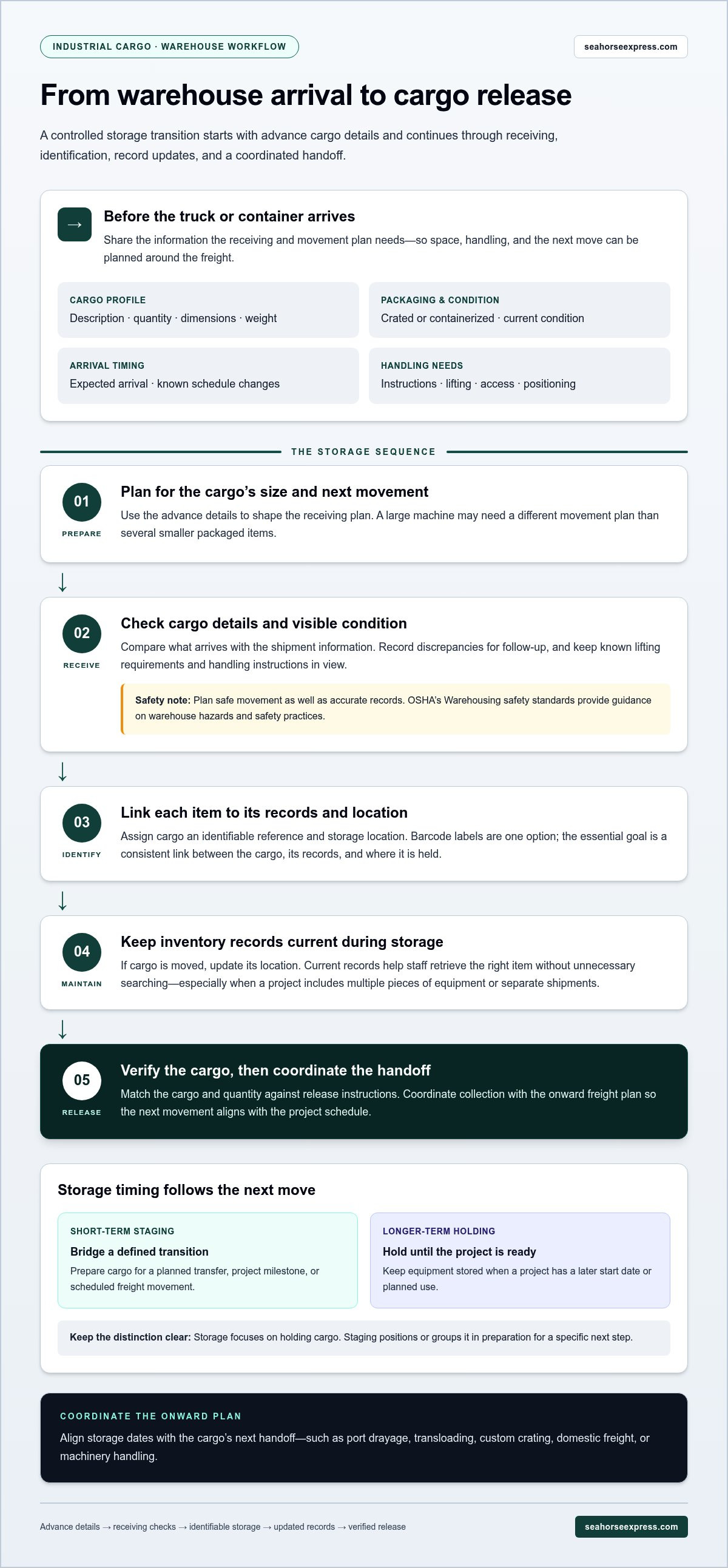
A reliable warehouse storage workflow starts before the truck or container arrives and continues until the cargo is released for its next move. Each stage depends on accurate information. A mismatch in dimensions, weight, quantity, or packaging can affect space planning and handling.
Advance cargo details, receiving checks, planned placement, inventory updates, and release checks help keep stored freight identifiable and aligned with its onward movement.
What Information Is Needed Before Cargo Arrives?
Share these details in advance so the receiving and movement plan reflects the freight:
- Cargo description, quantity, dimensions, and weight
- Packaging type, including whether equipment is crated or containerized
- Expected arrival timing and any known schedule changes
- Current cargo condition and handling instructions
- Known lifting, access, or positioning requirements
This information helps the receiving team prepare for the freight’s size, packaging, and handling needs. A large machine may require a different movement plan than several smaller packaged items. Clear instructions also make it easier to identify and document issues when cargo arrives.
How Do Inventory Records Support Warehouse Storage?
At receiving, compare cargo details and visible condition with the shipment information, and record any discrepancies for follow-up. Assign the cargo an identifiable reference and storage location. Barcode labels are one option, but the essential goal is a consistent link between the cargo, its records, and where it is held.
Keep records current throughout the storage period. If cargo is moved, update its location so staff can retrieve the right item without unnecessary searching. Before release, match the cargo and quantity against the release instructions, then coordinate collection with the onward freight plan. This is especially useful when a project includes multiple pieces of equipment or separate shipments.
Plan for safe movement as well as accurate records. The Occupational Safety and Health Administration’s Warehousing safety standards provide guidance on warehouse hazards and safety practices. Include known lifting requirements and handling instructions in the cargo information shared before arrival.
Seahorse Express connects commercial storage with cargo handling and domestic freight planning, helping organize the transition from receipt to release. Explore warehouse storage services as part of a coordinated cargo plan.
Which Warehouse Storage Approach Fits Different Cargo Needs?
The right warehouse storage approach depends on what the cargo must do next, how long it needs to be held, and what handling it requires. Temporary staging for freight scheduled to move onward differs from holding equipment well before a project is ready. The U.S. Bureau of Labor Statistics groups warehousing and related activities under Warehousing and Storage, but each cargo plan still needs to reflect the shipment and project.
Short-Term Staging or Longer-Term Storage?
Short-term staging supports a defined transition, such as a planned transfer, project milestone, or scheduled freight movement. The priority is keeping cargo identifiable and preparing it for that next step. Longer-term holding requires records and handling instructions that remain clear throughout the storage period, including when cargo is to be reviewed, accessed, or released. There’s no universal duration cutoff. The purpose and movement plan guide the approach.
How Does Industrial Cargo Change Storage Planning?
Size, weight, fragility, packaging, and handling complexity shape how cargo should be received, positioned, and retrieved. Standard packaged freight may be planned as grouped units, while crated machinery requires attention to the crate’s dimensions, condition, and movement requirements. Oversized or heavy cargo also needs a clear handling and release plan. Base storage decisions on these cargo details rather than assuming one setup fits every shipment.
| Cargo need | Planning considerations | Storage purpose |
|---|---|---|
| Standard packaged goods | Quantity, package dimensions, identification, and release sequence | Hold freight until its planned distribution or onward transport |
| Crated industrial equipment | Crate size and condition, weight, handling instructions, and access for retrieval | Protect and organize equipment pending project readiness or shipment |
| Oversized or heavy cargo | Overall dimensions, weight, movement path, and lifting requirements | Stage cargo around a specific handling or transport transition |
| Fragile cargo | Packaging condition, handling precautions, and any restrictions on movement | Hold cargo while maintaining a clear plan for careful release |
Use the table as a starting point, then align storage with the cargo’s destination and schedule. A shipment arriving ahead of a project may need longer-term holding; cargo matched to a transport slot may need temporary staging. In either case, consistent records and agreed handling instructions keep the plan clear. The right arrangement depends on the project, not a fixed warehouse formula.
How to Plan Warehouse Storage for Commercial Cargo
A useful warehouse storage plan connects the cargo’s physical requirements with the dates and responsibilities that govern its movement. Build the plan before arrival and update it when shipment details or project milestones change. Put expected port arrival, warehouse receipt, project readiness, and onward transport on the same schedule to make timing gaps visible early.
What Should a Warehouse Storage Plan Include?
Use this checklist to prepare the core information and decisions:
- Identify the cargo. Record its description, quantity, dimensions, weight, and any identifying marks or reference numbers.
- Set the timeline. Note expected arrival, the purpose of storage, anticipated release, and the destination after release. Compare these dates with port, project, and transport milestones.
- Document packaging and condition. Describe whether cargo is palletized, crated, or otherwise packaged, and record its condition at handoff.
- Define handling needs. Share known lifting, access, positioning, or other movement instructions so handling can be planned around the cargo.
- Assign record ownership. Name who maintains cargo identifiers, updates location or schedule information, and communicates changes to the relevant project and freight teams.
- Set release expectations. Specify what cargo is to be released, where it is going, and how release timing aligns with the next transport leg.
For high-value industrial equipment, custom crating for industrial equipment can help protect cargo through handling and storage transitions. Include crate dimensions and handling instructions in the plan, then carry them through to loading and release.
How Can Businesses Reduce Storage Handoff Problems?
Keep cargo identifiers consistent across warehouse records, carrier paperwork, and project documentation. If a shipment is split or its schedule changes, update shared records so each team is working from the same cargo details and release plan. Before the next transport leg, coordinate loading requirements and timing with the warehouse release schedule.
These steps give each handoff a clear reference point, from port arrival through storage and onward movement. To connect storage planning with transport and handling, explore Seahorse Express logistics services.
Connect Warehouse Storage with Industrial Freight and Machinery Logistics
Warehouse storage can link cargo arrival, preparation, and onward domestic transportation. A shipment may reach a port before inland transport is scheduled or before the receiving project is ready. Planned staging gives cargo a place in the logistics sequence while teams coordinate its next move, rather than treating storage as a separate endpoint.
This connection matters for cargo arriving in flat-rack or open-top containers. Port drayage and transloading move freight from the port into the next stage of its journey, while storage can bridge a timing gap before domestic transport. Plan the handoff around cargo details and the project schedule to clarify when goods are received, prepared, and released.
When Does Storage Fit into a Freight Plan?
Storage fits when arrival and onward movement don’t line up. For example, cargo may need to be staged after port arrival until a full truckload or partial truckload movement is scheduled. Align the expected release with the carrier’s pickup and destination requirements to keep the freight plan connected from port transfer through inland transport. Learn how professional drayage services can fit into that sequence.
How Does Storage Support Machinery Projects?
Industrial equipment may pass through several transitions: dismantling, crating, storage, transport, and preparation for installation. The sequence depends on the project, but each handoff benefits from clear cargo identification, handling instructions, and timing. Custom-built wooden crating can help protect high-value equipment as it moves between stages, while rigging and machinery handling may be part of planning complex moves.
For projects involving equipment removal and relocation, connect the storage plan to the work described in this guide to industrial machinery removal. Coordinating storage with crating, port transfers, and domestic freight helps teams define the transition points without assuming every project follows the same route or schedule.
Seahorse Express brings warehousing and storage together with port drayage, transloading, custom crating, machinery handling, and domestic transport. Plan industrial cargo storage and logistics around your shipment’s next move.
Make Storage Part of the Cargo Plan
Effective warehouse storage connects cargo arrival with its eventual use or onward transport. Planning begins with accurate details about dimensions, weight, packaging, condition, and handling needs. From there, businesses can match short-term staging or longer-term holding to project milestones and freight schedules.
Clear inventory records and release instructions help keep cargo identifiable through each handoff. For complex equipment moves, coordinating storage with custom crating, port drayage, transloading, domestic freight, and machinery handling can bring the steps into one considered logistics plan.
Seahorse Express provides secure warehouse facilities for short-term and long-term commercial storage and cargo staging, alongside services that support cargo transitions. Plan your industrial cargo storage and logistics around the shipment’s next move.
Frequently Asked Questions
What is warehouse storage?
Warehouse storage is the holding of commercial goods or equipment between receiving and a later use, distribution, or transport step. Unlike self-storage, it supports a business logistics plan rather than storage of personal belongings. Depending on the cargo and project, the process may include receiving checks, identification, staging, inventory records, and release coordination. The workflow should reflect the cargo requirements and its next planned movement.
How does warehouse storage work?
Warehouse storage typically begins with sharing cargo details before arrival. After receiving, the shipment is identified, its condition is recorded, and its placement and handling are planned. Clear inventory records help track the cargo while it’s held. Before release, teams coordinate the correct cargo, timing, and onward transport. Dimensions, weight, packaging, condition, and arrival timing inform the plan.
What is the difference between short-term and long-term warehouse storage?
Short-term storage commonly bridges a temporary gap, such as time between port arrival and inland transport or a delay before a project milestone. Longer-term storage holds cargo for an extended planned period before use or movement. Neither term has a universal duration cutoff. In either case, businesses need clear cargo records, handling instructions, a stated storage purpose, and an anticipated release plan.
Can warehouse storage be used for industrial machinery?
Yes. Industrial machinery can be stored when its dimensions, weight, packaging, lifting needs, and later transport are included in the plan. Crating may help prepare equipment for movement, while rigging or machinery dismantling may be relevant to a complex relocation. Base the storage and handling plan on the project and cargo requirements, including how the equipment will be moved and released.
How should a business prepare cargo for warehouse storage?
Document the cargo’s identity, quantity, dimensions, weight, packaging, condition, and known handling instructions. Record expected arrival timing, the purpose of storage, anticipated release, and the next destination. Keep identifiers consistent across cargo records and transport documents so teams can coordinate the shipment’s next movement. For industrial equipment that needs protective packaging, consider custom crating as part of the plan, based on the cargo and its handling requirements.
What happens if stored cargo needs to move before the planned release date?
An earlier move requires updated release timing, accurate cargo identification, and coordination between the parties managing storage and transportation. Review access and loading needs, packaging condition, handling instructions, and onward freight arrangements before setting the revised movement plan. Clear, updated records help teams identify the correct cargo and prepare the handoff. Set timing according to the cargo and project plan.


