
What if a crate protects equipment on the truck but leaves it vulnerable during lifting, storage, or transfer? Industrial cargo passes through multiple handling stages, so custom crating needs to account for the full journey. The aim is to secure the equipment, limit movement, and address relevant exposure risks at each stage. Start by considering how the cargo will be prepared, lifted, loaded, stored, and transferred.
Seahorse Express engineers custom-built wooden crates and packaging for high-value industrial equipment. The design depends on details such as the equipment’s dimensions, weight, center of gravity, and vulnerable components, along with the route and handling requirements. Internal supports and protective materials also affect how well the crate limits movement and cushions cargo.
This article explains when custom crating is useful and how cargo and journey details shape crate construction. It also covers how to coordinate crating with machinery dismantling and rigging, storage, freight, and port transfers. Planning these steps together helps align the crate with the equipment and the movement plan.
Key Takeaways
- Custom crating is designed around the equipment and its journey, helping address risks general-purpose packaging may not account for.
- Dimensions, weight, center of gravity, vulnerable components, and handling conditions all inform crate design.
- Compare protection approaches by considering cargo fragility, exposure, handling needs, and transport method.
- Use a shipment checklist to coordinate equipment documentation, preparation, crate inspection, and handoff.
- Plan crating alongside rigging, storage, and freight movements so the logistics sequence works as a whole.
What Is Custom Crating, and When Does Industrial Equipment Need It?
Custom crating is packaging designed around a specific item, its handling requirements, and the route it will travel. Unlike general-purpose packing, it takes into account the cargo’s dimensions, weight, vulnerable areas, and support points. A crate is a rigid shipping enclosure, but its materials and construction can vary. For industrial equipment, the design should fit the actual cargo and planned movement, not just provide an outer box.
Standard cartons and loose-fill packing may suit smaller, less complex shipments. Machinery can present different challenges: it may be heavy, irregularly shaped, difficult to lift, or have exposed controls and components that need clearance. A crate provides a defined structure for supporting and securing cargo. It is not automatically the right choice for every shipment; the equipment and its handling conditions determine the appropriate approach.
Which industrial shipments may benefit from custom crating?
Machinery, standalone components, and high-value industrial equipment may benefit when their shape, fragility, or handling requirements call for tailored support. A protruding component, uneven base, or designated lifting point can affect where the cargo needs support and how it can be positioned inside the crate. A machine that is robust in operation may still have delicate controls or surfaces that need protection during shipping.
Assess the shipment as a whole. Document the equipment’s size and weight, how it will be lifted, and the conditions it may encounter in transit. Then check whether the proposed packaging allows access for loading and unloading. Protective features should not obstruct planned handling or cover lifting points that need to remain accessible.
What does a custom crate protect against?
Each shipment has its own risks. Cargo may shift during transport, contact another surface, or experience impacts while being moved between handling stages. Dust, moisture, and other external exposure may also matter, depending on the equipment and route. Assess these factors rather than assuming that a crate’s enclosure protects against every environmental condition.
Crate design can separate equipment from external contact and limit movement through appropriate support and restraint. Internal blocking, bracing, or cushioning may be useful when the cargo and handling plan call for them. The goal is to address identified risks, not to promise that damage is impossible. Seahorse Express engineers custom-built wooden crates and packaging for high-value industrial equipment, coordinating crating with the broader handling and freight plan.
How Is a Custom Crate Designed for Industrial Cargo?
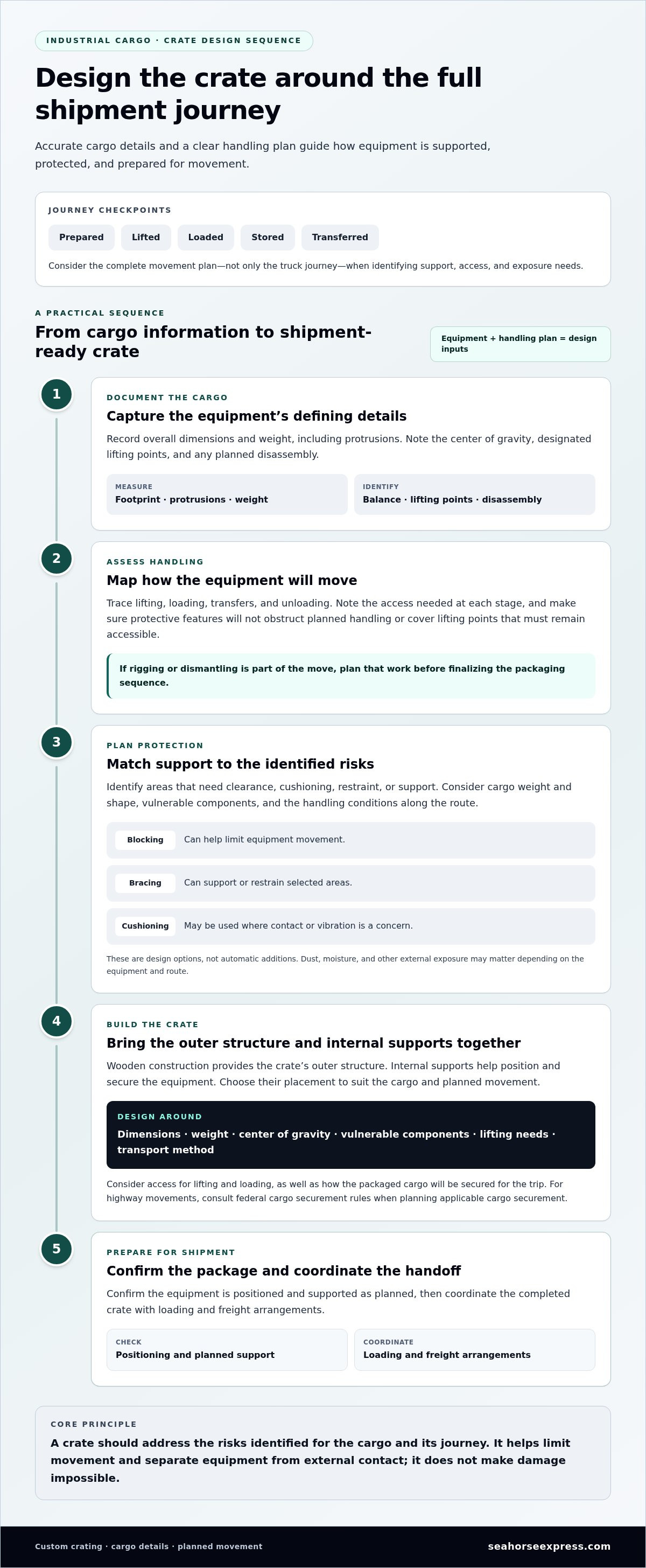
A sound crate design starts with accurate cargo information and ends with a package that fits the handling plan. Industrial crate design depends on the equipment’s dimensions, weight, center of gravity, vulnerable components, lifting needs, and transport method. These details guide the crate’s size and structure, as well as how the equipment will be supported and accessed.
Work through the design in a practical sequence:
- Document the cargo: Record its overall dimensions and weight, identify lifting points, and note any planned disassembly.
- Assess handling: Map how the equipment will be lifted, loaded, transferred, and unloaded. Note the access required at each step.
- Plan protection: Identify areas that need clearance, cushioning, restraint, or support based on the cargo and journey.
- Build the crate: Select wooden construction and internal features suited to the equipment and planned movement.
- Prepare for shipment: Confirm the equipment is positioned and supported as planned, then coordinate the completed crate with loading and freight arrangements.
What cargo details inform crate design?
Measure the full footprint, including protrusions, and document the machine’s weight and center of gravity. Note designated lifting points and any disassembly requirements, since removing a component can change the cargo’s dimensions, balance, or handling access. Identify delicate controls, moving parts, exposed surfaces, and other areas that need specific clearance or protection.
Accurate information helps the crate fit the equipment instead of forcing the cargo into a generic layout. It also helps align crate access with the lifting and loading sequence. If rigging or dismantling is part of the move, plan that work before finalizing the packaging sequence.
How do materials and internal supports work together?
Wood construction provides the crate’s outer structure, while internal supports help position the equipment. Blocking can limit movement, bracing can support or restrain selected areas, and cushioning can be used where contact or vibration is a concern. These are design options, not automatic additions. Their placement and use should reflect the cargo’s weight, shape, vulnerable parts, and handling conditions.
The crate also needs to fit the transport plan. Consider access for lifting and loading alongside how the packaged cargo will be secured for the trip. For highway movements, consult the federal cargo securement rules when planning applicable cargo securement. Seahorse Express coordinates custom crating services with industrial handling and freight planning, connecting packaging decisions to the shipment’s next steps.
Which Crate Design and Protection Approach Fits the Shipment?
No single crate design suits every industrial shipment. The decision depends on the cargo’s size and vulnerability, the handling it will encounter, possible exposure, and how it will travel. General packing may be adequate for compact, durable items with straightforward handling. A purpose-built wooden crate is worth assessing when equipment needs a rigid enclosure, specific internal support, or planned access for lifting and loading.
| Shipment factor | General packing may fit when… | A custom wooden crate may be worth assessing when… |
|---|---|---|
| Cargo size and shape | The item is compact and can be secured with standard packaging. | The equipment is oversized, heavy, irregular, or difficult to support with ordinary packing. |
| Fragility and exposed areas | The item has few vulnerable parts and can be protected with flexible materials. | Controls, protrusions, or sensitive surfaces need clearance or targeted support. |
| Handling demands | The shipment can be handled without specialized access or a rigid base. | Lifting points, rigging, or loading methods call for a defined structure and access plan. |
| Exposure and transport | The route and staging conditions present limited packaging concerns. | The shipment needs an enclosure or support plan suited to its handling and staging conditions. |
When is a wooden crate preferable to general packing?
Consider a crate for equipment that is heavy, unusually shaped, high-value, or vulnerable at specific points. Unlike flexible packing materials, a wooden crate provides a rigid outer structure that can be built around the cargo. Internal bracing, blocking, or cushioning can be added where the equipment and movement plan call for them. The objective is to match protection to the risk, not to add packaging without purpose.
Crating may be unnecessary for compact, durable cargo that is easy to secure and handle using general packing. Assess the full shipment before deciding: equipment condition matters, but so do loading, transfers, and the transport method. A crate that does not work with the handling plan can complicate access rather than help.
How should transport and storage change the design?
Map the journey from lifting and loading through any staging, storage, transfer, and unloading. Required access points and handling methods can influence crate openings, support placement, and the position of the packaged equipment. If machinery will be dismantled or rigged, coordinate that sequence with packaging so the crate accommodates the planned movement. For a broader view of move planning, see machinery removal and industrial equipment moves.
Effective custom crating connects the equipment’s needs to the realities of its route. Choose an approach that addresses identified cargo risks while fitting the handling and transport plan.
How Do You Prepare Industrial Equipment for Crating and Shipping?
A smooth shipment begins before the crate is built. Clear cargo records, an agreed handling sequence, and a planned freight handoff help keep preparation aligned from equipment access through loading. Use this checklist to organize the move:
- Record the cargo: Note equipment identity, dimensions, weight, condition, lifting points, and sensitive or exposed areas.
- Plan dismantling and rigging: Document which parts need removal, how components will be handled, and what access lifting requires.
- Coordinate preparation: Set the sequence for equipment preparation, crating, and any required inspection before shipment.
- Inspect the completed crate: Check that the cargo is positioned as planned, internal supports are in place, and handling access is clear.
- Prepare the handoff: Align shipment records, crate markings, handling instructions, and freight details so the next stage has clear information.
What should be documented before crating?
Start with accurate dimensions and weight, the equipment’s identity and condition, and details about its lifting points. Record delicate controls, protrusions, moving parts, or other areas that need attention. Include disassembly requirements and handling instructions that could affect how the cargo is prepared or positioned.
These records help the crating and freight plan reflect the actual equipment rather than assumptions. They also support identification and cargo tracking as the shipment moves between preparation, storage, and transport. Keep the same cargo details with the shipment handoff, and coordinate crate markings and handling instructions with the people managing each movement.
How does crating connect to staging and transport?
Map the sequence from equipment preparation to crating, storage if needed, loading, and onward freight. If the plan calls for staging, warehousing and storage can fit between crating and dispatch. Dismantling or rigging can change access and the order of work, so coordinate those activities before packaging is complete.
The transport mode matters, too. For a domestic full truckload movement, review the shipment sequence and handoff needs alongside truckload freight shipping. If cargo will move through a port, include drayage and any relevant transloading in the plan; see professional drayage and port logistics.
Seahorse Express coordinates custom crating with equipment handling, storage, and freight logistics. Plan your industrial crating and shipment as connected steps, from preparation through transport handoff.
How Can Custom Crating Fit Into an Industrial Logistics Plan?
Crating works best as part of a coordinated move, not as a separate packaging task. The equipment’s condition and dimensions inform the crate; the crate then needs to work with preparation, lifting, staging, and transport. Planning these steps together helps align how cargo is secured with how it will be handled along the way.
What does coordinated industrial crating and freight planning involve?
Begin by mapping the equipment’s movement from preparation to its destination. Machinery dismantling may affect the order of work and how components are packed. Rigging plans influence access and lifting arrangements. If cargo needs to wait between crating and dispatch, warehousing and storage can support staging within the overall sequence.
Transport requirements also shape the plan. Heavy hauling or domestic freight may follow crating, while shipments moving through a port may involve port drayage or transloading. For relevant cargo, Seahorse Express coordinates drayage and transloading for flat-rack and open-top containers at major U.S. ports. Aligning these handoffs connects the packaging plan with the freight movement instead of treating each step in isolation.
Seahorse Express brings together custom crating for high-value industrial equipment with machinery dismantling and rigging, warehousing and storage, heavy hauling, and freight logistics. The arrangement is tailored to the equipment, handling plan, and intended shipment.
What information helps start a custom crating plan?
Prepare the details that define the cargo and its route. A useful starting point includes:
- Equipment dimensions, approximate weight, identity, and condition
- Known lifting points, exposed or sensitive components, and disassembly needs
- Destination and intended transport method
- Known handling, storage, timing, or transfer requirements
Some details may still be in progress, but the information already available can help frame the plan. Clear cargo details and movement requirements provide a practical starting point, including where storage or port transfers may fit.
Gather the equipment and shipment details, then discuss custom crating and industrial freight planning with Seahorse Express.
Plan Protection Around the Full Journey
Industrial cargo needs packaging that fits both the equipment and the way it will move. Custom crating starts with cargo details such as dimensions, weight, vulnerable components, and lifting needs. Those inputs guide crate construction, internal support, and access for handling.
The crate is one part of the plan. Coordinating equipment preparation, rigging, storage, and freight helps align protection with each stage, from staging and loading through transport and transfer. Seahorse Express engineers custom-built wooden crates and packaging for high-value industrial equipment, alongside handling and logistics capabilities that support a coordinated move.
Gather the equipment details, destination, and known handling or storage requirements. Then plan custom crating and industrial freight with Seahorse Express so cargo protection is connected to the journey ahead.
Frequently Asked Questions
What is custom crating?
Custom crating is packaging built around specific cargo, its handling needs, and its shipping journey. For industrial equipment, the design can account for dimensions, weight, lifting points, and vulnerable components. Internal supports and crate access are planned to suit the item and movement process. Seahorse Express engineers custom-built wooden crates and packaging for high-value industrial equipment, coordinating protection with the shipment’s wider handling and freight requirements.
When does industrial equipment need a custom crate?
Industrial equipment may need a custom crate when its size, weight, shape, fragility, or handling requirements make general-purpose packaging unsuitable. A machine with exposed controls, protruding parts, an uneven base, or specific lifting points may need tailored support and clearance. The decision depends on the cargo and shipment conditions, including loading, transfers, and transport. A crate is useful when its structure addresses identified risks, not simply because the cargo is industrial.
How is a custom shipping crate designed?
A custom shipping crate is designed by documenting the cargo, assessing how it will be lifted and transported, planning protection, building the enclosure, and preparing it for shipment. Key inputs include dimensions, weight, center of gravity, lifting points, and vulnerable components. The plan may also account for disassembly, access for loading, and the transport method. Blocking, bracing, or cushioning are selected according to the equipment and movement plan.
What is the difference between custom crating and standard packing?
Standard packing uses general-purpose materials and methods, while custom crating creates a rigid enclosure planned around a specific item and its handling. Flexible packing can suit compact, durable cargo with straightforward shipping needs. A wooden crate may be more appropriate for equipment that is heavy, irregularly shaped, or needs defined support and access for lifting. The right option depends on cargo-specific risks and the complete route, not a one-size-fits-all rule.
Can custom crating be coordinated with machinery transport?
Yes. Custom crating can be planned alongside machinery dismantling and rigging, warehousing and storage, heavy hauling, and domestic freight. Coordination helps align preparation, lifting access, crate design, staging, and loading with the transport sequence. For shipments involving a port, drayage and container transloading may also be part of the logistics plan. Considering these stages together connects the package to the way the equipment will move.
Are export crates subject to special requirements?
Export crates may be subject to wood-packaging requirements that depend on the destination and materials used. Requirements can include treatment and marking for certain solid wood packaging, so address them during planning rather than after the crate is built. Because rules can change and destination requirements vary, verify current requirements for the intended shipment before arranging export packaging. Avoid assuming that one standard applies to every international route.
What information should I provide for a custom crating plan?
Provide the equipment’s dimensions, approximate weight, identity, condition, and destination. Include lifting points, sensitive or exposed components, and any known disassembly or rigging needs. Details about planned storage, handling, transfer points, timing, and transport method also help shape the plan. If some information is still being gathered, share what is available and identify what remains open. Clear cargo and route details help align the crate with the intended move.


